• Compare Liberal Arts Colleges
    • Big 10 Comparison Analysis

Liberal Arts Colleges

the Complete Guide to Liberal Arts Colleges

  • Home
  • College Essay Help
  • College Acceptance Rates
  • School Comparisons
  • College Rankings
  • Write for Us
You are here: Home / Schools / Princeton University

Princeton University

Princeton, NJ
Take me to Survey Results

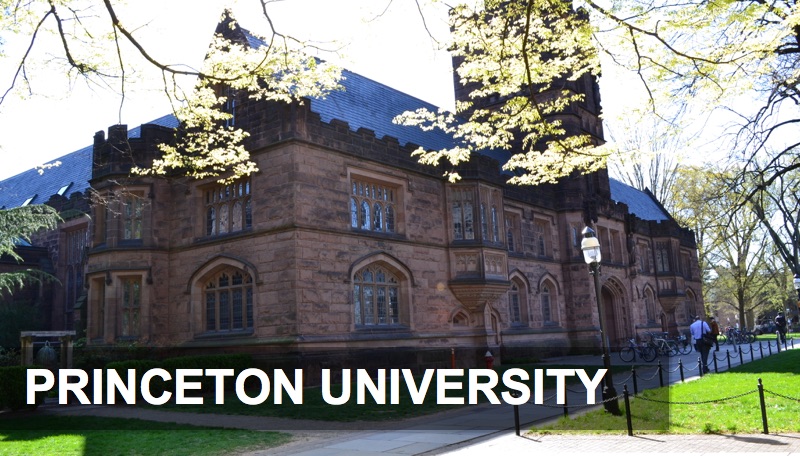
Princeton UniversityPrinceton University places great emphasis on transferring the rigorous academic content learned by its students into action that benefits society and the world. Students are encouraged to view their education, research, and experiential learning opportunities through the lens of contributing meaningfully to humanity. The Bridge Program allows a small group of students to defer their admission for a year in order to engage in international service projects. A University Volunteer Firefighter program trains students to work with the local fire department to serve the community. The Pace Center for Civic Engagement connects students with opportunities to participate in service to the community in a variety of ways.

The Princeton connection also lasts long after students have graduated. The alumni network at the university is strong and vibrant, with graduates returning to campus for events, funding research opportunities, and networking with current and past students. The atmosphere of community and the spirit of collaboration throughout the academic and social environments lend to lifelong community and partnerships that benefit students for the rest of their lives.

History of Princeton University

Princeton University was initially founded as the College of New Jersey in Elizabeth in 1746. Over the following ten years, the school moved to Newark and then to Princeton when 10 acres of land was deeded to the college. Nassau Hall, the first building to be constructed on the new campus, served as the Capitol of the United States in 1783. National leaders during and after the American Revolution, including John Witherspoon and James Madison, graduated from or worked for Princeton in the later part of the 18th century.

Many of the current hallmarks of Princeton University were established in the latter half of the 19th century. The first edition of The Princetonian, the daily newspaper still published by students during the academic year, was printed in 1876. The Princeton University Art Museum was founded just 8 years later. At the turn of the century, the honor system at the college was established and the graduate school was created. Most significantly, the school was officially renamed as Princeton University.

The 20th century saw growth in the diversity on campus, which continues into the present day. Jewish students founded the Student Hebrew Association and began hosting services on campus; the Center for Jewish Life was established later. The first African-American students graduated from the University after completing the Navy V-12 Program, and the first African-American professor was appointed to the university. The first woman received her phD degree, and the college granted tenure to its first female faculty member. Women were also allowed to join the undergraduate class beginning in 1969, and the Women’s Center was established two years later. In 2005, the Lesbian, Gay, Bisexual, and Transgender Center was opened on campus, and programs to study African American and Latino cultures were introduced several years later.

Campus Life at Princeton University

Princeton offers a vibrant social life on campus with over 300 student organizations and more than three dozen athletic clubs. Students can get involved in the school and surrounding communities in many ways, such as through tutoring, joining an a cappella group, or learning a new skill through a specialized club. Even with several thousand undergraduate students on campus, clubs and organizations make it easy to find students with shared interests and characteristics.

Princeton University also boasts an impressive athletic program. The NCAA Division I university has accumulated the most wins of all of the Ivy League schools, and student athletes have achieved national championships and played in the Olympics. Even for students who are not among the nearly 20 percent of the student body who play on Varsity sports teams, cheering on the Tigers is a fun way to build community and school spirit.

Financial Aid

Princeton University has a comprehensive and generous financial aid program. Families who make under $65,000 annually are not expected to contribute to tuition expenses, including room and board. Higher income brackets are eligible for partial aid. Most financial aid is provided through grant money that does not need to be paid back. More than half of students receive financial aid support from the college, and more than 80 percent of students graduate from Princeton free of debt.

Leave a Reply Cancel reply

Your email address will not be published. Required fields are marked *

  • Overview
  • Community & Safety
  • Academics
  • Social Life

Overview

25 students have given us feedback on this college.

Despite college rankings and beautiful college websites, most students and families know very little about the actual student experience at particular schools. College websites, campus tours and conversations with high school guidance counselors provide very limited information.

The Voice of the Student Survey compares the responses of over 7,500 liberal arts college undergraduates on more than 40 questions about college life. As a result, we learned what “real life” looks like at individual schools.

Despite scripted campus tours designed to get you to say, “It just feels right,” no college is perfect. Two campuses that you are comparing might seem very similar on the surface when, in fact, the students tell a very different story.

That is why we surveyed thousands of liberal arts students, to help you get the real scoop about the student experience… the good, the bad and the ugly. As a Liberal Arts Insider member, you have access to the data we’ve collected from these Liberal Arts Colleges students.

Campus Community Coach & Safety Sherpa

How safe, accepted, and comfortable students feel on their college campus is one of the largest influencing factors as to how satisfied they feel with their college experience. Having a tight-knit college community is the cornerstone of a successful college experience, as proven by our Voice of the Students survey.

We can compare what the college brochures advertise to what students are actually experiencing; sometimes the admissions representatives have no idea how students on their campus really feel. This “Community” section is a way to find out exactly what students think about their campus, in their own words. Here, we have data about student satisfaction, housing, social cliques, and student’s sense of safety.

What do you like best about your school? (you can have more than 1 answer)

Here is a representative sample of what students (in their own, unedited words) told us what they liked best about their school.
What students have to say?
Reponse
The Princeton University Band
The school spirit and sense of community
How the staff and faculty treat me like a capable human, not a number.
Undergraduate focus + access to major financial resources

What would you change about your school? (you can have more than 1 answer)

Here is a representative sample of what students (in their own, unedited words) told us what they would change about their college.
What students have to say?
Reponse
Overall, as a freshman, not much. There are definite issues with socioeconomic diversity, as well as social stratification. Despite having banned Greek life, Princeton still has "bicker" eating clubs, which require a rush-like process for admission. This doesn't become important until becoming an upperclassmen, but I don't understand the need for social stratification.
Academic Calendar
I would like the student body to be a little less intense about academics
Better dorms.
Social hierarchy has too much control on your life. Should be fixed.
I'd probably reform the bicker system somehow, because a lot of people seem to be emotionally and socially hurt by the exclusivity of a lot of clubs. But I'm not sure exactly how it could be changed.
Less of a competitive spirit
The people who attend here, the competition, the focus on things that don't really matter, the obsession with money and power.
Longer semesters, plus I think some aspects of campus culture relating to love and friendship are ridiculous, but there's no particularly easy fix to that.
allow student athlete scholarships (merit-based, not only need based)
Guiding freshman even during their first semester to explore possible majors.
Bicker eating clubs...

Overall, how satisfied are you with your college experience and why?

Students were asked to rate their satisfaction with their college experience on a scale of 0-10, with 0 being "not satisfied at all" and 10 being "extremely satisfied." What you see here is the college's average Satisfaction Score, a representative indicator of students’ feelings about the overall experience.

Sense of Community

"Sense of community" is defined as a feeling members have that they belong and they matter to one another and to the group. We asked students how they would rate the sense of community on campus.
Very weak
8.3%
Weak
0%
Average
37.5%
Very strong
54.2%

Housing Satisfaction

Student housing is often touted as a big selling point during the college recruiting process, even though often times the best housing is only available to a small percentage of students. So, we asked students, across the board, how satisfied are you with your housing?
Not Satisfied
8.3%
Somewhat Satisfied
8.3%
Satisfied
33.3%
Very satisfied
50%
What students have to say?
Reponse
I have a large (let me emphasize large) single with a bathroom that I share with 1 other person. As a freshman. I'm not kidding
The bathroom is a floor below and the building is old, but the amount of space is nice and the architecture is beautiful.
Housing is nice but not equal.
I managed to get a single all my years thus far.
There are not enough dorms to accommodate students. Every year I have been forced to live with roommates due to a lack of single rooms, and these roommates have had an extremely negative impact on my experience here. Also, the dorms are very old and are so noisy, particularly in the winter, that it makes sleeping through the night nearly impossible.

Safe on Campus (Even at Night)?

We asked students: How safe do you feel on campus, even at night? This is an incredibly important set of data, because we found high correlation between a high sense of safety and the likelihood of liberal arts students to recommend their school to others. In fact, when students indicated they felt “very safe” on campus, they were nearly twice as likely to recommend their school to others as those who said they felt “somewhat safe.”
Unsafe
0%
Somewhat Safe
9.1%
Very Safe
90.9%

Ever Felt Discriminated Against?

Students deserve to feel safe and accepted on their college campus. This is especially a concern for underrepresented groups of students, which at Liberal Arts Colleges tend to be students of color and/or international students. To help you make the right decision about school choice and find out the truth that not all schools will share, we asked students, “Have you ever felt discriminated against based on social or physical characteristics? (e.g. gender, ethnicity, family background, sexual orientation, religion, country of origin).”
Never.
81.8%
A couple of times, but nothing major.
13.6%
Yes, sometimes. It happens more than I wish it did.
4.5%
Yes, often. It happens all the time.
0%
What students have to say?
Reponse
Yes. I have been discriminated for being a male.
A fair number of students do really hate white people and/or men, and I've encountered them several times, but I think it's smaller than at other universities.
I've never been discriminated, but people are not very tolerant of even slightly conservative beliefs.

Liberal or Conservative?

Which way does the campus lean? We ask students... In general, “liberal” people in the US tend to promote social justice and equality, and ask the government to help make society more fair. “Conservative” people tend to promote traditional social values and prefer less government involvement. In your opinion, is your school more liberal or more conservative?
Very liberal
23.8%
Liberal
47.6%
Neutral. Neither liberal nor conservative.
23.8%
Conservative
0%
Very conservative
0%
I'm not sure
4.8%

Academics Advisor

Without a doubt, academics are a major focus, if not the top priority, for many college students. Schools will often advertise their classrooms as collaborative, but we’ve found that students sometimes describe the academic environment as highly competitive. Are students helping each other with academic work or trying to get ahead? Do students spend every waking moment with their nose in a book?

We asked students both qualitative and quantitative questions to find out how the academics at this school challenge them, and contribute to their college experience. Find out directly from the students how they feel about academics, challenging or otherwise, at their school.

Workload

To get a qualitative measure of the way students feel about academics at their school, we asked “How manageable is the workload at your school?”
Easily Manageable - not difficult at all
0%
Very Manageable - occasionally difficult
4.2%
Manageable - reasonable amount of work
20.8%
Difficult - it consumes most of my time
54.2%
Extremely Difficult - it consumes all my time
20.8%

Studying Time

College is primarily about learning, but some colleges seem to require much more study time than others. For a more quantitative idea of the academic challenge at this college, we asked students, on average, how much time they spend studying.
Less than 7 hours per week, or less than an hour a day.
4.5%
7-17 hours per week, or about 1-2.5 hours per day.
13.6%
18-32 hours per week, or about 2.5-4.5 hours per day.
45.5%
33 hours per week or more, or more than 5 hours per day.
36.4%

Relationships with Professors

The opportunity to take advantage of small class sizes and accessibility of professors is a huge draw of many Liberal Arts Colleges, though some schools are better in this area than others. We asked students how they would describe their relationships with professors (not including other instructors).
Very distant. I don’t know my professors and they don’t know me.
0%
Distant. We acknowledge each other on campus but that’s it.
31.6%
Somewhat close. I’m pretty comfortable going to office hours or chatting with professors after class.
36.8%
Close. I am comfortable asking for advice and feel I have many professors I can turn to for guidance.
31.6%

Excitement About Learning

College is all about learning - both in and out of the classroom. The people that students are surrounded by, especially their professors, can have a huge impact on their learning experience. In a very large study, the researchers found excitement about learning was tied to long term career success. We asked students: “To what extent do you agree with the following: I have at least one professor who makes me excited about learning.” In our research, we found that students who "strongly agreed" with that statement were twice as likely to recommend their school to others as those who only "agreed."
Strongly Disagree
0%
Disagree
0%
Agree
31.8%
Strongly Agree
68.2%

Collaborative vs. Competitive

The learning environment of a college will certainly have a large impact on any student’s experience. No school will advertise a cutthroat environment, but we’ve found that some colleges are more competitive than they say. To find out how students perceive the environment on their campus, we asked if they would describe it as more competitive or collaborative.
Highly Competitive. Most students put their own success above others, and often compare their achievements to their peers in a competitive way.
28.6%
Competitive. Students work hard and have a competitive mentality, but can still work together when necessary.
38.1%
Collaborative. Overall, students work together well and don’t see school as a competition.
19%
Highly Collaborative. Working together to come up with the best solution is the norm. This is more important that trying to stand out individually.
14.3%
What students have to say?
Reponse
My science class is specifically designed to enforce collaboration--it's an integral part of the class. I have not really felt like any of my classes were seriously competitive.
There are almost no collaborative assignments. You're here for yourself and no student will make time to help you.
I don't really feel the competition but I think it exists
Virtually every class I like to work together with people, and I've really never found any problems in that regard.

Climate of Political Activism

Political climate on a college campus can affect the way students learn and interact with each other, especially if a student body is particularly politically active. We asked, “What is the climate of political activism at your school?” to find out about this school.
Uninvolved/nonexistent
0%
Somewhat existent. Every once in a while you see students protesting something or passing out political leaflets.
22.2%
Visible. Some students are politically involved, and may protest sometimes, but the protests are usually small and short-lived.
44.4%
Prominent. You can’t be here without being involved in the world’s politics on this campus in one way or another.
33.3%

Social Life Navigator

In addition to academics, social life is integral to the campus experience, and it’s dictated by a few different elements. Do students feel discriminated against based on their identities? Where do students spend most of their time socializing? Do drugs and alcohol dominate the social scene? This is the kind of information that schools will NOT advertise.

So, to find truthful answers these to questions, we asked students for their perspectives. We looked into social aspects such as extracurricular involvement, opportunities in the local community, and alcohol/drug culture on this campus.

Social Cliques

A "social clique" is a small group of people who spend time together and who are not friendly to other people. Students told us how prevalent social cliques are on their campus.
Nonexistent
0%
There are a few groups like this, but not many
12.5%
They exist, but don't play a big part in campus life
33.3%
They play a big part at this school
54.2%
I don’t know
0%
What students have to say?
Reponse
Bicker eating clubs can lead to this
Eating clubs.
Princeton is very cliquey. Athletes only spend time with other athletes and don't talk to anyone else, for instance. But despite their existance, there are always friendly groups of people who are willing to accept anyone who wants to be their friend.
We are definitely very cliquey, especially between teams and performance groups.
The eating clubs are terrible institutions. Know about them before you apply.
Eating clubs and secret societies

Socialize On or Off Campus?

Depending on the location of the college, as well as the climate on campus, each school will vary as to where the students find their social life. Do people party on campus? Or does campus tend to feel deserted at night or on the weekends? We asked students to tell us where they socialize for the most part: on or off campus?
Mostly on-campus
90.9%
Slightly more on-campus
0%
Equal balance between on and off-campus
4.5%
Slightly more off-campus
0%
Mostly off-campus
4.5%

Student Involvement in Local Community

In addition to student social life off campus, at Liberal Arts Colleges there are often opportunities to get involved in their surrounding community, through internships, etc. We asked students how involved their student body is in the local community.
Not at all. There’s like an invisible wall around campus.
9.1%
A little. Some people work, have internships, or volunteer off campus.
50%
Quite a bit. A lot of people work, have internships, and/or volunteer in the community.
27.3%
Very involved. I know a lot of people who work, have internships, and/or volunteer in the community.
13.6%

Alcohol

Alcohol is present on nearly all college campuses, though its influence varies across different schools. Colleges won’t advertise these kinds of statistics themselves, and often times they aren’t even asking the right kinds of questions. To find out the truth, we asked students, “How important is alcohol to social life on your campus?”
Vital, if you don't drink then you will stand out.
40%
Somewhat Important, drinking is part of most activities.
0%
Somewhat Unimportant, alcohol doesn't play much of a role at this school.
60%
Insignificant, hardly anyone drinks at social events.
0%
What students have to say?
Reponse
I don't drink at all and its never gotten in my way
I don't drink and often feel socially isolated.
Drinking is a part of most activities, but you can often enjoy them without drinking
It really depends on the social circle. If you don't want to drink you will be able to find other things to do.
Drinking is important for most parties, but a lot of people socialize without it!
You definitely *can* not drink if you choose to, and people are very chill about that. But the intensity of workloads / extracurriculars mean that everyone will basically always want to drink.
It's viewed as strictly a weekend activity
Optional drinking pervades most social activities

Drugs (Excluding Marijuana)

Similar to the influence of alcohol on college campuses, illegal drugs can affect the social life as well. Students told us, in their experience, how prevalent are illegal drugs on campus? (NOT including marijuana).
Nonexistent. I never see these.
19%
Somewhat around. It’s there but not a lot of it.
81%
Important. One or more of these drugs are a part of most activities.
0%
Vital. If you don’t partake you won’t fit in.
0%
What students have to say?
Reponse
Weed
Weed, probably.

Extracurricular and Organizational Activity

The involvement of students on campus is tied to sense of community - the more involved the students, the higher the sense of community. To gauge the involvement of the student body in different activities on their campus, we asked students, “How active are you in extracurricular activities and organizations at your school?”
Not active. I don’t participate in these programs.
4.8%
Somewhat active. I am involved monthly in one activity or organization.
0%
Pretty active. I am involved weekly in one or a combination of activities and organizations.
47.6%
Extremely active. I am involved daily or almost daily in activities and organizations.
47.6%

School Norms Toward Sexual Behavior

To find out the climate of this college regarding sexual behavior, including openness and hookup culture, we asked students, “What is your school’s norm toward sexual behavior in general?”
Abstinence is the promoted option.
0%
Discreet. Most encounters kept quiet and/or most couples are monogamous.
0%
Average. There are plenty of hookups but it’s usually within the norms of greater society.
65%
Sexual activity is everywhere and people are open about it.
35%

Climate Toward Homosexual Behavior

We asked students about their school's attitude towards homosexual behavior, intending to gauge the college's acceptance of the LGBT+ community.
It is forbidden at this school.
0%
It is frowned upon here.
0%
It is tolerated here.
15%
This school is gay-friendly.
85%

Fast Facts

Location:Princeton, NJ
Year Founded:1746
Number of Students:2001 or more
Avg Net Price:
Retention Rate (%):98
Reported Test Type:SAT
Test Scores (75% percentile):1590
Test Scores (25% percentile):1390
Freshman in Top 10% of HS Class (%):95
Admit Rate (%):7
School Selectivity:Highly Selective
4 Year Graduation Rate (%):97

Note: Facts compiled from school website as well as other data sources including: US Department of Education, IPEDS, College Board and NCES.

About LiberalArtsColleges.com

We share the value of the liberal arts colleges with families and give liberal arts schools the opportunity to highlight their unique characteristics.

Learn About School Profile Upgrades

Click Here

Share the Love

  • Facebook
  • Twitter

Over $76,000 in Liberal Arts College Scholarships are Available

Want to see what
College Scholarships
are a Good Match for You?
Yes,
Show Me My
Scholarship Matches
No,
I'm all set right now.
Maybe later.

Copyright © 2026 LiberalArtsColleges.com | Disclosure | About | Resources | Contact Us

Terms & Conditions | Privacy & GDPR | Google+