• Compare Liberal Arts Colleges
    • Big 10 Comparison Analysis

Liberal Arts Colleges

the Complete Guide to Liberal Arts Colleges

  • Home
  • College Essay Help
  • College Acceptance Rates
  • School Comparisons
  • College Rankings
  • Write for Us
You are here: Home / Schools / Cornell University

Cornell University

Ithaca, NY
Take me to Survey Results

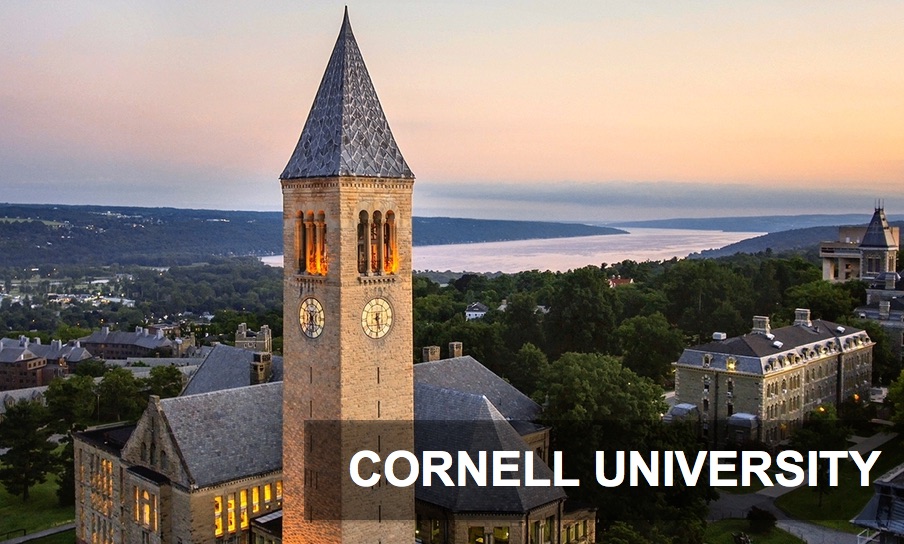
Cornell UniversityCornell University is located on 2,300 acres of beautiful land in the rural city of Ithaca, New York. As the land grant university for the state, Cornell offers its students a comprehensive selection of disciplines to study in addition to hands-on opportunities that might not be available at other large universities, such as in agriculture, labor and ecology. The areas surrounding campus include a friendly and food-centric college town, scenic views and plenty of outdoor recreational sites, especially the famed Ithaca gorges.

Offering an extensive list of over 80 areas of study for students to major in, there is something for everyone at Cornell University. The main campus features 8 undergraduate and 4 graduate and professional schools that allow students to continue on to advanced degrees right in Ithaca. Additionally, there are two medical schools in New York City, a marine lab in Maine, an art and architectural school in Rome and a medical college in Qatar to give students a host of opportunities for their classroom knowledge to be applied to authentic experiential learning environments.

History of Cornell University

Cornell University was founded in 1965 by Ezra Cornell and Andrew White. The two battled in the Senate over where to send the money from the Morill Land Grant Act. This lead to the creation of Cornell University in an effort to apply the money to one school with sufficient land to establish a college campus that met the demands set forth by the Act. Though they were initially met with significant opposition from other college leaders and religious leaders, Cornell and White continued with negotiations and were successful in securing the grant and founding the university.

Though Cornell was established later than other Ivy League colleges, the university was a pioneering influence for some of the more modern hallmarks of institutions of higher learning. The inaugural class at Cornell University was the largest in history up to that point with 412 students. The college was also one of the first American schools to enroll women alongside men, admitting its first female student in 1870. The elective system, in which students can choose their own course of study, was also introduced at Cornell University, and later adopted by other colleges and universities.

In the 20th century, Cornell University struggled with race relations on campus. Despite admitting African-American students since 1884, minority enrollment was low until the late 1960s when it became a focus of the university. Initially, there was racial tension, leading to the burning of the Africana Studies building and then a takeover of the student union building by some Afro-American students. This was a turning point for the leaders of the college in race relations on campus, and led to an overhaul of the campus judicial system and board of trustees. It also led the state of New York to create the Henderson Law, which requires campuses to set rules in order to maintain public order.

Campus Life at Cornell

Cornell University boasts more than 1,000 student organizations, including NCAA Division I athletic teams. With the rural setting of the campus, the college community is self-sustaining, providing plenty for students to do at Cornell and within the town of Ithaca without needing to travel any further. Despite having thousands of students on campus, the college has a smaller feel due to the setting and camaraderie of community.

In addition to traditional clubs and sports, Greek Life offers a community of peers for those who pledge. About a third of undergraduate students join a fraternity or sorority, and have the opportunity to participate in leadership development and service projects. Some students also have the option to live with their Greek family in a shared residence.

Financial Aid

Ezra Cornell felt strongly when founding Cornell University that anyone should be able to be educated there, regardless of background or income. That mantra holds true today, with about half of all students who attend Cornell receiving the support of financial aid. Many of these students are awarded a significant portion of aid in grant money, meaning that they are not saddled with enormous debt upon graduation. In addition to grants, Cornell offers work-study options and reduced loans.

  • Overview
  • Community & Safety
  • Academics
  • Social Life

Overview

26 students have given us feedback on this college.

Despite college rankings and beautiful college websites, most students and families know very little about the actual student experience at particular schools. College websites, campus tours and conversations with high school guidance counselors provide very limited information.

The Voice of the Student Survey compares the responses of over 7,500 liberal arts college undergraduates on more than 40 questions about college life. As a result, we learned what “real life” looks like at individual schools.

Despite scripted campus tours designed to get you to say, “It just feels right,” no college is perfect. Two campuses that you are comparing might seem very similar on the surface when, in fact, the students tell a very different story.

That is why we surveyed thousands of liberal arts students, to help you get the real scoop about the student experience… the good, the bad and the ugly. As a Liberal Arts Insider member, you have access to the data we’ve collected from these Liberal Arts Colleges students.

Campus Community Coach & Safety Sherpa

How safe, accepted, and comfortable students feel on their college campus is one of the largest influencing factors as to how satisfied they feel with their college experience. Having a tight-knit college community is the cornerstone of a successful college experience, as proven by our Voice of the Students survey.

We can compare what the college brochures advertise to what students are actually experiencing; sometimes the admissions representatives have no idea how students on their campus really feel. This “Community” section is a way to find out exactly what students think about their campus, in their own words. Here, we have data about student satisfaction, housing, social cliques, and student’s sense of safety.

What do you like best about your school? (you can have more than 1 answer)

Here is a representative sample of what students (in their own, unedited words) told us what they liked best about their school.
What students have to say?
Reponse
The location while in the middle of nowhere is beautiful and offers a calm surrounding full of natural beauty. The kids are really diverse and pleasant. Plus the dining halls are really good for school food.
The accepting environment, plethora of resources, amazing student body, amazing teachers and ideals for which it was founded
Location, Extracurricular Offerings
My friends I have made.

What would you change about your school? (you can have more than 1 answer)

Here is a representative sample of what students (in their own, unedited words) told us what they would change about their college.
What students have to say?
Reponse
As a member of Greek life, I would get rid of the system. There are too many fraternities at Cornell for a school of its size. I also believe they detract from the overall nature of the school. The school would be far better suited and more inclusive of all students it the campus got rid of the system.
We are not able to double major across colleges
Professors pack too much into a syllabus. We will read a book in one night and only spend half an hour talking about it. I'd rather learn less material, but go in depth.
housing process
Longer hours for north campus dining halls, and maybe it'd be nice to have dorm rooms painted in colors other than drab off-white.
The weather, but it's what you sign up for when you come here.
It is very intense and prestige and money are highly valued over someone who is kind and thoughtful.
Political Climate, Better School Athletic Spirit
The amount of slopes!
North campus is pretty far from Central campus but you can't really change that. The environment is pretty intense because everyone feels like they need to prove themselves because our grades are curved down not up.
Less emphasis on examinations and more on actually teaching to have students learn and retain the material.

Overall, how satisfied are you with your college experience and why?

Students were asked to rate their satisfaction with their college experience on a scale of 0-10, with 0 being "not satisfied at all" and 10 being "extremely satisfied." What you see here is the college's average Satisfaction Score, a representative indicator of students’ feelings about the overall experience.

Sense of Community

"Sense of community" is defined as a feeling members have that they belong and they matter to one another and to the group. We asked students how they would rate the sense of community on campus.
Very weak
3.8%
Weak
3.8%
Average
50%
Very strong
42.3%

Housing Satisfaction

Student housing is often touted as a big selling point during the college recruiting process, even though often times the best housing is only available to a small percentage of students. So, we asked students, across the board, how satisfied are you with your housing?
Not Satisfied
11.5%
Somewhat Satisfied
30.8%
Satisfied
23.1%
Very satisfied
34.6%
What students have to say?
Reponse
I believe that Cornell has great student housing. However, they need to restructure how it is operated. Cornell University needs to implement a house system like the other Ivy League Universities. This will foster a better sense of community across the campus.
Wide variety of options on campus. Housing isn't guaranteed in most situations to upperclassmen and off-campus housing is expensive.
I live in collegetown with a bunch of my friends, I love it.
One should have their housing plan and roommates decided by October before next year - pretty absurd. I lucked out and happen to live with my best friends and live close to campus on a lucky drop out of contract type situation.
I like because first year is on campus with every other freshmen. I like living off campus tho because I can drink and smoke in my room with friends.
As a former transfer student into Cornell being put into a single in the dorms on a floor that was very quite and very antisocial it sucked. I made friends in the marching band and moved into a house with them and it was the best decision I made here. So much nicer being with these great cool people.

Safe on Campus (Even at Night)?

We asked students: How safe do you feel on campus, even at night? This is an incredibly important set of data, because we found high correlation between a high sense of safety and the likelihood of liberal arts students to recommend their school to others. In fact, when students indicated they felt “very safe” on campus, they were nearly twice as likely to recommend their school to others as those who said they felt “somewhat safe.”
Unsafe
4.5%
Somewhat Safe
22.7%
Very Safe
72.7%

Ever Felt Discriminated Against?

Students deserve to feel safe and accepted on their college campus. This is especially a concern for underrepresented groups of students, which at Liberal Arts Colleges tend to be students of color and/or international students. To help you make the right decision about school choice and find out the truth that not all schools will share, we asked students, “Have you ever felt discriminated against based on social or physical characteristics? (e.g. gender, ethnicity, family background, sexual orientation, religion, country of origin).”
Never.
63.6%
A couple of times, but nothing major.
31.8%
Yes, sometimes. It happens more than I wish it did.
0%
Yes, often. It happens all the time.
4.5%
What students have to say?
Reponse
As a gay man coming from a very discriminatory hometown, Cornell gave me an opportunity to open up and be comfortable with who I am.
Cornell is very discriminatory when it comes to political views. There is an assumption that we all share the same beliefs, when it is okay to differ in one way or another.
Any person, any study. That says it all about the Cornell community, very diverse.

Liberal or Conservative?

Which way does the campus lean? We ask students... In general, “liberal” people in the US tend to promote social justice and equality, and ask the government to help make society more fair. “Conservative” people tend to promote traditional social values and prefer less government involvement. In your opinion, is your school more liberal or more conservative?
Very liberal
36.4%
Liberal
59.1%
Neutral. Neither liberal nor conservative.
0%
Conservative
0%
Very conservative
0%
I'm not sure
4.5%

Academics Advisor

Without a doubt, academics are a major focus, if not the top priority, for many college students. Schools will often advertise their classrooms as collaborative, but we’ve found that students sometimes describe the academic environment as highly competitive. Are students helping each other with academic work or trying to get ahead? Do students spend every waking moment with their nose in a book?

We asked students both qualitative and quantitative questions to find out how the academics at this school challenge them, and contribute to their college experience. Find out directly from the students how they feel about academics, challenging or otherwise, at their school.

Workload

To get a qualitative measure of the way students feel about academics at their school, we asked “How manageable is the workload at your school?”
Easily Manageable - not difficult at all
0%
Very Manageable - occasionally difficult
3.8%
Manageable - reasonable amount of work
23.1%
Difficult - it consumes most of my time
61.5%
Extremely Difficult - it consumes all my time
11.5%

Studying Time

College is primarily about learning, but some colleges seem to require much more study time than others. For a more quantitative idea of the academic challenge at this college, we asked students, on average, how much time they spend studying.
Less than 7 hours per week, or less than an hour a day.
4.5%
7-17 hours per week, or about 1-2.5 hours per day.
22.7%
18-32 hours per week, or about 2.5-4.5 hours per day.
59.1%
33 hours per week or more, or more than 5 hours per day.
13.6%

Relationships with Professors

The opportunity to take advantage of small class sizes and accessibility of professors is a huge draw of many Liberal Arts Colleges, though some schools are better in this area than others. We asked students how they would describe their relationships with professors (not including other instructors).
Very distant. I don’t know my professors and they don’t know me.
0%
Distant. We acknowledge each other on campus but that’s it.
33.3%
Somewhat close. I’m pretty comfortable going to office hours or chatting with professors after class.
44.4%
Close. I am comfortable asking for advice and feel I have many professors I can turn to for guidance.
22.2%

Excitement About Learning

College is all about learning - both in and out of the classroom. The people that students are surrounded by, especially their professors, can have a huge impact on their learning experience. In a very large study, the researchers found excitement about learning was tied to long term career success. We asked students: “To what extent do you agree with the following: I have at least one professor who makes me excited about learning.” In our research, we found that students who "strongly agreed" with that statement were twice as likely to recommend their school to others as those who only "agreed."
Strongly Disagree
0%
Disagree
0%
Agree
31.8%
Strongly Agree
68.2%

Collaborative vs. Competitive

The learning environment of a college will certainly have a large impact on any student’s experience. No school will advertise a cutthroat environment, but we’ve found that some colleges are more competitive than they say. To find out how students perceive the environment on their campus, we asked if they would describe it as more competitive or collaborative.
Highly Competitive. Most students put their own success above others, and often compare their achievements to their peers in a competitive way.
13.6%
Competitive. Students work hard and have a competitive mentality, but can still work together when necessary.
40.9%
Collaborative. Overall, students work together well and don’t see school as a competition.
36.4%
Highly Collaborative. Working together to come up with the best solution is the norm. This is more important that trying to stand out individually.
9.1%
What students have to say?
Reponse
Everyone wants to do well, but it's never about trying to beat other people
This depends on the major. Smaller, trickier majors in the college of engineering are much more likely to be close and collaborative, with everyone working together to help each other understand. Larger majors that can be worked through without as much help and discussion among fellow students are more likely to be competitive.

Climate of Political Activism

Political climate on a college campus can affect the way students learn and interact with each other, especially if a student body is particularly politically active. We asked, “What is the climate of political activism at your school?” to find out about this school.
Uninvolved/nonexistent
0%
Somewhat existent. Every once in a while you see students protesting something or passing out political leaflets.
19%
Visible. Some students are politically involved, and may protest sometimes, but the protests are usually small and short-lived.
52.4%
Prominent. You can’t be here without being involved in the world’s politics on this campus in one way or another.
28.6%

Social Life Navigator

In addition to academics, social life is integral to the campus experience, and it’s dictated by a few different elements. Do students feel discriminated against based on their identities? Where do students spend most of their time socializing? Do drugs and alcohol dominate the social scene? This is the kind of information that schools will NOT advertise.

So, to find truthful answers these to questions, we asked students for their perspectives. We looked into social aspects such as extracurricular involvement, opportunities in the local community, and alcohol/drug culture on this campus.

Social Cliques

A "social clique" is a small group of people who spend time together and who are not friendly to other people. Students told us how prevalent social cliques are on their campus.
Nonexistent
12%
There are a few groups like this, but not many
16%
They exist, but don't play a big part in campus life
52%
They play a big part at this school
20%
I don’t know
0%
What students have to say?
Reponse
There are certainly friend groups but they are not exclusionary.
I'm in the Ecology house, it's its own community and is very friendly.
Greek life is huge on campus and I did not get into a fraternity when I rushed my first time. Second time I had made great friends already so I decided not to join a lower-tier frat. I really just wanted to hook up with girls anyway.
Depends on the college within the larger university. some colleges breed more cliquiness than others.

Socialize On or Off Campus?

Depending on the location of the college, as well as the climate on campus, each school will vary as to where the students find their social life. Do people party on campus? Or does campus tend to feel deserted at night or on the weekends? We asked students to tell us where they socialize for the most part: on or off campus?
Mostly on-campus
13.6%
Slightly more on-campus
27.3%
Equal balance between on and off-campus
40.9%
Slightly more off-campus
4.5%
Mostly off-campus
13.6%

Student Involvement in Local Community

In addition to student social life off campus, at Liberal Arts Colleges there are often opportunities to get involved in their surrounding community, through internships, etc. We asked students how involved their student body is in the local community.
Not at all. There’s like an invisible wall around campus.
0%
A little. Some people work, have internships, or volunteer off campus.
36.4%
Quite a bit. A lot of people work, have internships, and/or volunteer in the community.
45.5%
Very involved. I know a lot of people who work, have internships, and/or volunteer in the community.
18.2%

Alcohol

Alcohol is present on nearly all college campuses, though its influence varies across different schools. Colleges won’t advertise these kinds of statistics themselves, and often times they aren’t even asking the right kinds of questions. To find out the truth, we asked students, “How important is alcohol to social life on your campus?”
Vital, if you don't drink then you will stand out.
0%
Somewhat Important, drinking is part of most activities.
0%
Somewhat Unimportant, alcohol doesn't play much of a role at this school.
87.5%
Insignificant, hardly anyone drinks at social events.
12.5%
What students have to say?
Reponse
It depends on what circles you build, there is something for everyone. Additionally, there is very little peer pressure to drink if you choose not to.
There's a lot of drinking, but there are plenty of opportunities to socialize without drinking
I know there are parties and such, but there's no stigma for not going to them. There are plenty of students who don't party.
Drink if you want to. Nothing's required.

Drugs (Excluding Marijuana)

Similar to the influence of alcohol on college campuses, illegal drugs can affect the social life as well. Students told us, in their experience, how prevalent are illegal drugs on campus? (NOT including marijuana).
Nonexistent. I never see these.
21.1%
Somewhat around. It’s there but not a lot of it.
78.9%
Important. One or more of these drugs are a part of most activities.
0%
Vital. If you don’t partake you won’t fit in.
0%
What students have to say?
Reponse
Weed. Apparently hella frats use Coke.
Aderol, coke, meth, other hard drugs used by the rich people. I don't associate with that social class and also drugs are not my thing.

Extracurricular and Organizational Activity

The involvement of students on campus is tied to sense of community - the more involved the students, the higher the sense of community. To gauge the involvement of the student body in different activities on their campus, we asked students, “How active are you in extracurricular activities and organizations at your school?”
Not active. I don’t participate in these programs.
13.6%
Somewhat active. I am involved monthly in one activity or organization.
18.2%
Pretty active. I am involved weekly in one or a combination of activities and organizations.
40.9%
Extremely active. I am involved daily or almost daily in activities and organizations.
27.3%

School Norms Toward Sexual Behavior

To find out the climate of this college regarding sexual behavior, including openness and hookup culture, we asked students, “What is your school’s norm toward sexual behavior in general?”
Abstinence is the promoted option.
0%
Discreet. Most encounters kept quiet and/or most couples are monogamous.
4.8%
Average. There are plenty of hookups but it’s usually within the norms of greater society.
66.7%
Sexual activity is everywhere and people are open about it.
28.6%

Climate Toward Homosexual Behavior

We asked students about their school's attitude towards homosexual behavior, intending to gauge the college's acceptance of the LGBT+ community.
It is forbidden at this school.
0%
It is frowned upon here.
0%
It is tolerated here.
19%
This school is gay-friendly.
81%

Fast Facts

Location:Ithaca, NY
Year Founded:1865
Number of Students:2001 or more
Avg Net Price:$ 30,000
Retention Rate (%):97
Reported Test Type:SAT
Test Scores (75% percentile):1550
Test Scores (25% percentile):1390
Freshman in Top 10% of HS Class (%):86
Admit Rate (%):15
School Selectivity:Highly Selective
4 Year Graduation Rate (%):93

Note: Facts compiled from school website as well as other data sources including: US Department of Education, IPEDS, College Board and NCES.

About LiberalArtsColleges.com

We share the value of the liberal arts colleges with families and give liberal arts schools the opportunity to highlight their unique characteristics.

Learn About School Profile Upgrades

Click Here

Share the Love

  • Facebook
  • Twitter

Over $76,000 in Liberal Arts College Scholarships are Available

Want to see what
College Scholarships
are a Good Match for You?
Yes,
Show Me My
Scholarship Matches
No,
I'm all set right now.
Maybe later.

Copyright © 2026 LiberalArtsColleges.com | Disclosure | About | Resources | Contact Us

Terms & Conditions | Privacy & GDPR | Google+