• Compare Liberal Arts Colleges
    • Big 10 Comparison Analysis

Liberal Arts Colleges

the Complete Guide to Liberal Arts Colleges

  • Home
  • College Essay Help
  • College Acceptance Rates
  • School Comparisons
  • College Rankings
  • Write for Us
You are here: Home / Schools / Connecticut College

Connecticut College

New London, CT
Take me to Survey Results
Connecticut College

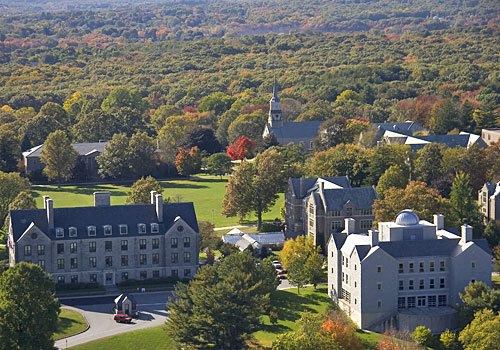
Photo: Connecticut College. Retrieved from: www.conncoll.edu

Connecticut College is known for its selectivity of students and its rigorous academic programs, as well as its interdisciplinary academic centers. This institution competes in the New England Small College Athletic Conference (NESCAC). Connecticut is a member of the group of colleges colloquially known as the “little ivies”, which is made up of small colleges with academic standards and facilities that can rival the big universities belonging to the Ivy League. Standardized test scores are not required for admission.

A Connecticut College education will help you develop skills for success in any arena. You’ll learn how to evaluate and synthesize information, solve complex problems, reason cogently and communicate effectively. The honor code is a tradition that the school upholds, and its main message is self-discipline. All academic and social activities in the campus are done under the honor code, which the students implement in whatever they do.

A degree from Connecticut College education is geared towards helping the graduate succeed in his or her field. The college offers opportunities for off-campus education through college-funded internships, student-faculty research, service learning and study-abroad programs. The school specializes in majors in the arts, sciences, humanities and social sciences department. The mission of the school is to “educate students to put the liberal arts into action as citizens in a global society”.

School History

Connecticut College started out as Connecticut College for Women in 1891. The school was established during the time when Wesleyan University closed its doors to women. The campus is picturesque, right on the Thames River, and with a beautiful view of the Long Island Sound on the highest point in New London. During that time, women were started to develop the interest in higher education, prompting some colleges to establish female counterparts of already established all-male colleges. Since 1932, the Connecticut College has been accredited by the New England Association of Schools and Colleges. In 1969, the college changed its name to Connecticut College when the institution became co-educational.

Campus Life

The student population is nearly 2,000, with males comprising approximately forty percent of this population. Connecticut College residences compruse 23 halls or houses. All the residence halls or houses are located very near the school, so most students prefer to walk rather than drive to class. Each house is unique in terms of architecture and the environment surrounding it. Some are modern, while other houses are classically designed in the granite style. The best residences are those that afford the view of Tempel Green, where the lacrosse and soccer teams compete and practice regularly, and those that have views of Long Island Sound. There are special theme houses, such as Knowlton Language House, 360Earth House, and Burdick.

There is no Greek housing system and there are no freshman-only residences. Each house welcomes all year levels, but most upperclassmen take the singles while freshmen live in doubles, triples and quads. There is a Residential Education and Living office that will match a student with a roommate based on the answers to the residence-related questionnaire in the application kit.

Social life in Connecticut College revolves around the activities in the residence halls. Most residences hold acquaintance parties where members of each house discuss rules and plan events. Study breaks are organized as well as teams that engage in competition versus the other houses.

Financial Aid

The amount of financial aid given to a student is based on the demonstrated financial need, which is determined by the Financial Aid Office based on the documents submitted by the student and his or her family. Grants are awarded, and the average amount received by each qualifying student is around thirty thousand. Loans and a work-study job may be offered as a part of a student’s financial package. The average student loan a student has to pay back after graduation is close to $30,000.

  • Overview
  • Community & Safety
  • Academics
  • Social Life

Overview

Despite college rankings and countless beautiful college websites, most students and families know very little about the actual student experience at particular schools. College websites, campus tours and conversations with high school guidance counselors provide very limited information.

The Voice of the Student Survey compares the responses of over 7,500 liberal arts college undergraduates on more than 40 questions about college life. As a result, we learned what “real life” looks like at individual schools.

Some of the best (and worst) performers in our research are surprising. Some are among the U.S. News & World Report’s top ranked liberal arts colleges in the country, while others are ranked much lower but provide a successful student experience.

Our Liberal Arts Insider members know exactly how these colleges compare.

We surveyed thousands of liberal arts students to help you get the real scoop about the student experience… the good, the bad and the ugly.

Campus Community Coach & Safety Sherpa

How safe, accepted, and comfortable students feel on their college campus is one of the largest influencing factors as to how satisfied they feel with their college experience. Having a tight-knit college community is the cornerstone of a successful college experience, as proven by our Voice of the Students survey.

We can compare what the college brochures advertise to what students are actually experiencing; sometimes the admissions representatives have no idea how students on their campus really feel. This “Community” section is a way to find out exactly what students think about their campus, in their own words. Here, we have data about student satisfaction, housing, social cliques, and student’s sense of safety.

Get Our In Depth Analysis of Liberal Arts Colleges

The smartest way to cut through the college marketing hype and pick a college that is a perfect fit for your child is to become a Liberal Arts Insider member. Our research reveals inside information that colleges will never tell you.
Learn More

Academics Advisor

Without a doubt, academics are a major focus, if not the top priority, for many college students. Schools will often advertise their classrooms as collaborative, but we’ve found that students sometimes describe the academic environment as highly competitive. Are students helping each other with academic work or trying to get ahead? Do students spend every waking moment with their nose in a book?

We asked students both qualitative and quantitative questions to find out how the academics at this school challenge them, and contribute to their college experience. Find out directly from the students how they feel about academics, challenging or otherwise, at their school.

Get Our In Depth Analysis of Liberal Arts Colleges

The smartest way to cut through the college marketing hype and pick a college that is a perfect fit for your child is to become a Liberal Arts Insider member. Our research reveals inside information that colleges will never tell you.
Learn More

Social Life Navigator

In addition to academics, social life is integral to the campus experience, and it’s dictated by a few different elements. Do students feel discriminated against based on their identities? Where do students spend most of their time socializing? Do drugs and alcohol dominate the social scene? This is the kind of information that schools will NOT advertise.

So, to find truthful answers these to questions, we asked students for their perspectives. We looked into social aspects such as extracurricular involvement, opportunities in the local community, and alcohol/drug culture on this campus.

Get Our In Depth Analysis of Liberal Arts Colleges

The smartest way to cut through the college marketing hype and pick a college that is a perfect fit for your child is to become a Liberal Arts Insider member. Our research reveals inside information that colleges will never tell you.
Learn More

Fast Facts

Location:New London, CT
Year Founded:1911
Number of Students:1001 to 2000
Avg Net Price:$ 27,000
Retention Rate (%):90
Reported Test Type:SAT
Test Scores (75% percentile):1400
Test Scores (25% percentile):1300
Freshman in Top 10% of HS Class (%):45
Admit Rate (%):40
School Selectivity:Highly Selective
4 Year Graduation Rate (%):79

Note: Facts compiled from school website as well as other data sources including: US Department of Education, IPEDS, College Board and NCES.

About LiberalArtsColleges.com

We share the value of the liberal arts colleges with families and give liberal arts schools the opportunity to highlight their unique characteristics.

Learn About School Profile Upgrades

Click Here

Share the Love

  • Facebook
  • Twitter

Over $76,000 in Liberal Arts College Scholarships are Available

Want to see what
College Scholarships
are a Good Match for You?
Yes,
Show Me My
Scholarship Matches
No,
I'm all set right now.
Maybe later.

Copyright © 2026 LiberalArtsColleges.com | Disclosure | About | Resources | Contact Us

Terms & Conditions | Privacy & GDPR | Google+