• Compare Liberal Arts Colleges
    • Big 10 Comparison Analysis

Liberal Arts Colleges

the Complete Guide to Liberal Arts Colleges

  • Home
  • College Essay Help
  • College Acceptance Rates
  • School Comparisons
  • College Rankings
  • Write for Us
You are here: Home / Schools / Columbia University

Columbia University

New York, NY
Take me to Survey Results

Columbia University

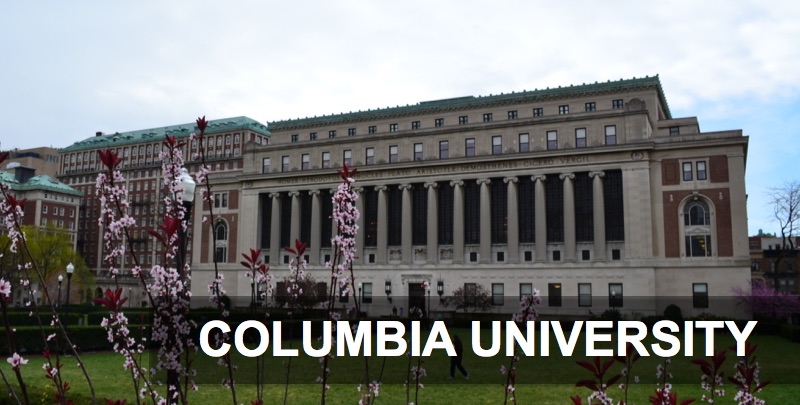
Columbia University is home to thousands of undergraduate students each year. Situated in the upper west side of New York City, the campus has a secluded and close-knit feel despite the bustling metropolis surrounding it. Featuring three different undergraduate schools and over 80 areas of study, students can major in nearly anything at Columbia. Students also have options to combine undergraduate and graduate studies to earn advanced degrees more quickly.

The university is also well-known for their research initiatives and outcomes. Faculty at Columbia are dedicated to committing the resources of the university to help address global challenges and crises. With hundreds of research centers and institutes on campus and around the world, students have ample opportunities to apply their academic learning to problem solving for the greater good of the world.

As part of its initiative to prepare its students to be leaders with global influence upon graduation, Columbia University offers its students opportunities to help New York residents through community service. Through unique programs such as the Double Discovery Center, the Washington Heights Health Initiative, and Community Impact, students have the opportunity to volunteer in these organizations and give back to the greater community. Students have the opportunity to work collaboratively and develop practical skills that will be useful in their post-graduate endeavors.

History

Columbia University was founded in 1754 with a class of 8 students as King’s College through a royal charter from England’s King George II. Though the college was affiliated with the Anglican Church, the founders recognized the need for religious liberty on the cusp of the American Revolution. The war required the university to halt instruction for eight years, though several of the influencing men at the forefront of the establishment of the United States were students at and trustees of King’s College. The school opened up again following the war with its new name signifying freedom and independence, Columbia College.

In the years following the Revolutionary War and the rebranding of the college, Columbia continued to grow, evolve, and spread its influence. In the latter half of the 19th century, the Columbia School of Law and the mining school that would become the Fu Foundation School of Engineering and Applied Science were both opened. In 1890, the college moved to a university system, absorbing the Barnard College for Women, the Teachers College, and the medical school. The university campus also moved in 1897 to its current location at Morningside Heights. The number of students and the degrees offered by the school expanded significantly following this merger and location change.

The expansion and success of Columbia University continued into the 20th century, though there was a brief period of crisis and unrest during the 1960s due to the Vietnam War and the Civil Rights movement. Protesting students shut down the university for days in 1968 until the police forcibly removed over 1,000 people. The events during this era led to the university losing money and creating discord and a loss of morale in the campus community. The college has rebounded over the past several decades and has regained its reputation as a prestigious and hallowed institution for higher learning.

Campus Life

When Columbia University was moved to Morningside Heights at the close of the 19th century, the campus was created to resemble the agora of Athens in both appearance and purpose. With the Low Library as the architectural centerpiece, promenades, paths and greens connect this historical structure with dormitories, dining halls, and academic buildings across the campus. Although newer buildings have been constructed in the years since, the campus has maintained the same connected feeling.

On campus, students have the option to join clubs, athletic teams, or participate in a variety of community service and extracurricular groups. Columbia University offers NCAA Division I sports for athletes to participate in, and spectators to observe and root on their Columbia Lions. Students can engage in or attend a variety of arts exhibitions, including visual arts exhibitions, dance recitals, theater productions, and musical performances. The surrounding community of New York City also offers an endless supply of arts, sports and other cultural events for students to immerse themselves in.

Financial Aid

Columbia University provides scholarships, grants and work study support for students who are eligible. Academic success, athletic talents, membership of some ethnic groups and the family’s financial need can all impact the University’s decision to provide aid to its students.

  • Overview
  • Community & Safety
  • Academics
  • Social Life

Overview

45 students have given us feedback on this college.

Despite college rankings and beautiful college websites, most students and families know very little about the actual student experience at particular schools. College websites, campus tours and conversations with high school guidance counselors provide very limited information.

The Voice of the Student Survey compares the responses of over 7,500 liberal arts college undergraduates on more than 40 questions about college life. As a result, we learned what “real life” looks like at individual schools.

Despite scripted campus tours designed to get you to say, “It just feels right,” no college is perfect. Two campuses that you are comparing might seem very similar on the surface when, in fact, the students tell a very different story.

That is why we surveyed thousands of liberal arts students, to help you get the real scoop about the student experience… the good, the bad and the ugly. As a Liberal Arts Insider member, you have access to the data we’ve collected from these Liberal Arts Colleges students.

Campus Community Coach & Safety Sherpa

How safe, accepted, and comfortable students feel on their college campus is one of the largest influencing factors as to how satisfied they feel with their college experience. Having a tight-knit college community is the cornerstone of a successful college experience, as proven by our Voice of the Students survey.

We can compare what the college brochures advertise to what students are actually experiencing; sometimes the admissions representatives have no idea how students on their campus really feel. This “Community” section is a way to find out exactly what students think about their campus, in their own words. Here, we have data about student satisfaction, housing, social cliques, and student’s sense of safety.

What do you like best about your school? (you can have more than 1 answer)

Here is a representative sample of what students (in their own, unedited words) told us what they liked best about their school.
What students have to say?
Reponse
NYC
Academics, life in NYC
It is very diverse--you have people from all over the country, and all over the world from all different walks of life. No matter what class you're in, you'll always have a very wide spread of points of view.
the reputation, the location, strength in social sciences and humanities
Being in New York City is obviously incredible because you can explore whenever you have free time, but it also allows so many opportunities to get internships during the school year.
I love all of the people and the conversations that are possible, as well as the school culture and its location in New York City.
I love how this is a school where you're actually likely to read pieces by the faculty themselves. I'm also a fan of how everyone here has some interest or talent that really makes them stand out. It's really easy to find people with your interests here.
The knowledge and reputation of the professors
Even though I'm an engineer, I've gotten the opportunity to take a diverse range of classes (History, Art History, Archaeology, etc) that I would have never thought I would have gotten the change to take. Also, it sounds like a cliche but you can't beat being in the city and having to go to museums as an assignment.
I like that this school is very politically active. After Trump's election, students on campus have shown their voice to pressure Columbia to take action against Trump's discriminatory policies.

What would you change about your school? (you can have more than 1 answer)

Here is a representative sample of what students (in their own, unedited words) told us what they would change about their college.
What students have to say?
Reponse
Psychological Services could be much better in scheduling appointments faster. And tutoring should be expanded.
The stress culture
mental health, stress culture, student atmosphere
Reduce stress culture Made administration more responsive to student needs
Core requirements can be overbearing
I wish that the campus community was more engaging--it's a medium sized school, but we're not a community--you have to go out and make friends and make an effort to keep in contact with them. I wish the school addressed that lack of school unity better.
there should be more support for mental health. Since the beginning of my college education 24 students died most of them because of suicide
The Stress Culture is terrible and it is exasperated by being in NYC.
The pathetic-ness of the "stress culture"/general narcissism among the student body
People like to talk about how stressed they are and how much work they have which fosters unhealthy levels of competition and perpetuates the stress culture. Furthermore, counselling and psych services are sparse and hard to keep up with consistently which means many students don't utilize them even if they need them.
I would like my school to have better mental health awareness programs and put in better measures to help students destress.
The administration - specifically the deans - are the absolute worst. They DO NOT care about you. They care about their job.
Unfortunately there just isn't a lot of school spirit, especially when it comes to athletics. I would love if everyone got really excited for football games, but thats just not something that happens here.
I would change the stigma of failure. Students here are under much stress to outperform everyone else, except everyone is so intelligent that there is bound to be a clash. When a student doesn't get the grade they wanted, they feel like failures. Or when students are so busy trying to outperform, they isolate themselves and feel alone and that no one cares for them, which is not true. With the high suicide rates recently, I think healing the emotional and mental wounds is a must.
The community, the amount of work, the celebration of unhealthy habits (poor sleep, extreme fatigue, amount of work, loneliness).

Overall, how satisfied are you with your college experience and why?

Students were asked to rate their satisfaction with their college experience on a scale of 0-10, with 0 being "not satisfied at all" and 10 being "extremely satisfied." What you see here is the college's average Satisfaction Score, a representative indicator of students’ feelings about the overall experience.

Sense of Community

"Sense of community" is defined as a feeling members have that they belong and they matter to one another and to the group. We asked students how they would rate the sense of community on campus.
Very weak
13.6%
Weak
20.5%
Average
47.7%
Very strong
18.2%

Housing Satisfaction

Student housing is often touted as a big selling point during the college recruiting process, even though often times the best housing is only available to a small percentage of students. So, we asked students, across the board, how satisfied are you with your housing?
Not Satisfied
7%
Somewhat Satisfied
11.6%
Satisfied
41.9%
Very satisfied
39.5%
What students have to say?
Reponse
It's a single, and there are lots of opportunities for singles starting from freshman year.
Very good price point for NYC, still a bit rough to get good housing.
Expensive and old.
Far away from campus, too old. Wasn't awarded housing for senior year.
Junior and senior housing is especially really nice.
The housing near campus is really expensive. If we move away from the campus, it becomes difficult to balance work and social life.
Living in a Special Interest Community, I feel that there is a sense of community, however, there appears to be cliques within the community itself and there is still lots of administrative oversight that can feel overbearing on a close living group.

Safe on Campus (Even at Night)?

We asked students: How safe do you feel on campus, even at night? This is an incredibly important set of data, because we found high correlation between a high sense of safety and the likelihood of liberal arts students to recommend their school to others. In fact, when students indicated they felt “very safe” on campus, they were nearly twice as likely to recommend their school to others as those who said they felt “somewhat safe.”
Unsafe
0%
Somewhat Safe
8.8%
Very Safe
91.2%

Ever Felt Discriminated Against?

Students deserve to feel safe and accepted on their college campus. This is especially a concern for underrepresented groups of students, which at Liberal Arts Colleges tend to be students of color and/or international students. To help you make the right decision about school choice and find out the truth that not all schools will share, we asked students, “Have you ever felt discriminated against based on social or physical characteristics? (e.g. gender, ethnicity, family background, sexual orientation, religion, country of origin).”
Never.
55.9%
A couple of times, but nothing major.
29.4%
Yes, sometimes. It happens more than I wish it did.
8.8%
Yes, often. It happens all the time.
5.9%
What students have to say?
Reponse
About religion--Columbia is not very religion-friendly unless you're in a group of people who are religious.
I'm white, cis, and straight, so ...

Liberal or Conservative?

Which way does the campus lean? We ask students... In general, “liberal” people in the US tend to promote social justice and equality, and ask the government to help make society more fair. “Conservative” people tend to promote traditional social values and prefer less government involvement. In your opinion, is your school more liberal or more conservative?
Very liberal
82.4%
Liberal
14.7%
Neutral. Neither liberal nor conservative.
0%
Conservative
0%
Very conservative
0%
I'm not sure
2.9%

Academics Advisor

Without a doubt, academics are a major focus, if not the top priority, for many college students. Schools will often advertise their classrooms as collaborative, but we’ve found that students sometimes describe the academic environment as highly competitive. Are students helping each other with academic work or trying to get ahead? Do students spend every waking moment with their nose in a book?

We asked students both qualitative and quantitative questions to find out how the academics at this school challenge them, and contribute to their college experience. Find out directly from the students how they feel about academics, challenging or otherwise, at their school.

Workload

To get a qualitative measure of the way students feel about academics at their school, we asked “How manageable is the workload at your school?”
Easily Manageable - not difficult at all
0%
Very Manageable - occasionally difficult
4.5%
Manageable - reasonable amount of work
20.5%
Difficult - it consumes most of my time
50%
Extremely Difficult - it consumes all my time
25%

Studying Time

College is primarily about learning, but some colleges seem to require much more study time than others. For a more quantitative idea of the academic challenge at this college, we asked students, on average, how much time they spend studying.
Less than 7 hours per week, or less than an hour a day.
2.9%
7-17 hours per week, or about 1-2.5 hours per day.
17.1%
18-32 hours per week, or about 2.5-4.5 hours per day.
45.7%
33 hours per week or more, or more than 5 hours per day.
34.3%

Relationships with Professors

The opportunity to take advantage of small class sizes and accessibility of professors is a huge draw of many Liberal Arts Colleges, though some schools are better in this area than others. We asked students how they would describe their relationships with professors (not including other instructors).
Very distant. I don’t know my professors and they don’t know me.
0%
Distant. We acknowledge each other on campus but that’s it.
38.7%
Somewhat close. I’m pretty comfortable going to office hours or chatting with professors after class.
48.4%
Close. I am comfortable asking for advice and feel I have many professors I can turn to for guidance.
12.9%

Excitement About Learning

College is all about learning - both in and out of the classroom. The people that students are surrounded by, especially their professors, can have a huge impact on their learning experience. In a very large study, the researchers found excitement about learning was tied to long term career success. We asked students: “To what extent do you agree with the following: I have at least one professor who makes me excited about learning.” In our research, we found that students who "strongly agreed" with that statement were twice as likely to recommend their school to others as those who only "agreed."
Strongly Disagree
2.9%
Disagree
2.9%
Agree
29.4%
Strongly Agree
64.7%

Collaborative vs. Competitive

The learning environment of a college will certainly have a large impact on any student’s experience. No school will advertise a cutthroat environment, but we’ve found that some colleges are more competitive than they say. To find out how students perceive the environment on their campus, we asked if they would describe it as more competitive or collaborative.
Highly Competitive. Most students put their own success above others, and often compare their achievements to their peers in a competitive way.
29.4%
Competitive. Students work hard and have a competitive mentality, but can still work together when necessary.
55.9%
Collaborative. Overall, students work together well and don’t see school as a competition.
14.7%
Highly Collaborative. Working together to come up with the best solution is the norm. This is more important that trying to stand out individually.
0%
What students have to say?
Reponse
Although often seen as a bad part about the experience, I have enjoyed the competitive environment here and the challenge I have felt competing with some of the brightest students in the world.
Students work extremely hard, but aren't extremely smart
It is evident that many of the students were top of their class in high school and are out to do the best they can.
I'm in humanities, so we aren't graded on curves against our classmates, which makes people more collaborative. However, most work is individual in nature.
There are some really low-life competitive people here, but amongst friend groups, I don't really see this.

Climate of Political Activism

Political climate on a college campus can affect the way students learn and interact with each other, especially if a student body is particularly politically active. We asked, “What is the climate of political activism at your school?” to find out about this school.
Uninvolved/nonexistent
0%
Somewhat existent. Every once in a while you see students protesting something or passing out political leaflets.
0%
Visible. Some students are politically involved, and may protest sometimes, but the protests are usually small and short-lived.
23.5%
Prominent. You can’t be here without being involved in the world’s politics on this campus in one way or another.
76.5%

Social Life Navigator

In addition to academics, social life is integral to the campus experience, and it’s dictated by a few different elements. Do students feel discriminated against based on their identities? Where do students spend most of their time socializing? Do drugs and alcohol dominate the social scene? This is the kind of information that schools will NOT advertise.

So, to find truthful answers these to questions, we asked students for their perspectives. We looked into social aspects such as extracurricular involvement, opportunities in the local community, and alcohol/drug culture on this campus.

Social Cliques

A "social clique" is a small group of people who spend time together and who are not friendly to other people. Students told us how prevalent social cliques are on their campus.
Nonexistent
5.3%
There are a few groups like this, but not many
28.9%
They exist, but don't play a big part in campus life
47.4%
They play a big part at this school
18.4%
I don’t know
0%
What students have to say?
Reponse
The athletes and their teams are pretty tightly knit and sometimes not very well liked on campus.
This isn't the type of school where everyone is spending time together at a football game. That being said, there are plenty of great student groups where you can find great friends.
Social niches exist to a certain extent at every college, especially mid-large sized universities. If you find your niche, it is relatively easy to make friends. If not, Columbia (as with many other similarly sized schools, I would imagine) can be a very lonely place.
Friends form their friend groups and hang out with the same people, but they are not mean to others or exclusive at all....

Socialize On or Off Campus?

Depending on the location of the college, as well as the climate on campus, each school will vary as to where the students find their social life. Do people party on campus? Or does campus tend to feel deserted at night or on the weekends? We asked students to tell us where they socialize for the most part: on or off campus?
Mostly on-campus
29.4%
Slightly more on-campus
14.7%
Equal balance between on and off-campus
38.2%
Slightly more off-campus
17.6%
Mostly off-campus
0%

Student Involvement in Local Community

In addition to student social life off campus, at Liberal Arts Colleges there are often opportunities to get involved in their surrounding community, through internships, etc. We asked students how involved their student body is in the local community.
Not at all. There’s like an invisible wall around campus.
5.9%
A little. Some people work, have internships, or volunteer off campus.
38.2%
Quite a bit. A lot of people work, have internships, and/or volunteer in the community.
32.4%
Very involved. I know a lot of people who work, have internships, and/or volunteer in the community.
23.5%

Alcohol

Alcohol is present on nearly all college campuses, though its influence varies across different schools. Colleges won’t advertise these kinds of statistics themselves, and often times they aren’t even asking the right kinds of questions. To find out the truth, we asked students, “How important is alcohol to social life on your campus?”
Vital, if you don't drink then you will stand out.
5%
Somewhat Important, drinking is part of most activities.
0%
Somewhat Unimportant, alcohol doesn't play much of a role at this school.
95%
Insignificant, hardly anyone drinks at social events.
0%
What students have to say?
Reponse
I actually haven't been to any parties (yes, I'm a Junior), so I can't actually say. But it is possible to have a social life outside of going to parties.
It depends on who you hang out with. Plenty of people here don't drink, but a lot do.
It's up to you
Drinking is offered at many social events, but I have never been pressured. People generally respect the decision not to drink.
There is definitely a scene for everyone--whether it be drinking, smoking, or not at all. It is easy to find, but not necessary.
Like most colleges, drinking is a pretty important part of weekend activities. Most people here have a fake ID.
Drinking definitely does happen, but largely in a few select dorms or out at the bars, and there is a ton going on socially that does not revolve around drinking.

Drugs (Excluding Marijuana)

Similar to the influence of alcohol on college campuses, illegal drugs can affect the social life as well. Students told us, in their experience, how prevalent are illegal drugs on campus? (NOT including marijuana).
Nonexistent. I never see these.
18.2%
Somewhat around. It’s there but not a lot of it.
81.8%
Important. One or more of these drugs are a part of most activities.
0%
Vital. If you don’t partake you won’t fit in.
0%
What students have to say?
Reponse
Cocaine
Cocaine, molly
Adderall, Xanax, etc.
Aderall

Extracurricular and Organizational Activity

The involvement of students on campus is tied to sense of community - the more involved the students, the higher the sense of community. To gauge the involvement of the student body in different activities on their campus, we asked students, “How active are you in extracurricular activities and organizations at your school?”
Not active. I don’t participate in these programs.
20.6%
Somewhat active. I am involved monthly in one activity or organization.
17.6%
Pretty active. I am involved weekly in one or a combination of activities and organizations.
32.4%
Extremely active. I am involved daily or almost daily in activities and organizations.
29.4%

School Norms Toward Sexual Behavior

To find out the climate of this college regarding sexual behavior, including openness and hookup culture, we asked students, “What is your school’s norm toward sexual behavior in general?”
Abstinence is the promoted option.
0%
Discreet. Most encounters kept quiet and/or most couples are monogamous.
5.9%
Average. There are plenty of hookups but it’s usually within the norms of greater society.
64.7%
Sexual activity is everywhere and people are open about it.
29.4%

Climate Toward Homosexual Behavior

We asked students about their school's attitude towards homosexual behavior, intending to gauge the college's acceptance of the LGBT+ community.
It is forbidden at this school.
0%
It is frowned upon here.
0%
It is tolerated here.
2.9%
This school is gay-friendly.
97.1%

Fast Facts

Location:New York, NY
Year Founded:1754
Number of Students:2001 or more
Avg Net Price:$ 21,000
Retention Rate (%):96
Reported Test Type:SAT
Test Scores (75% percentile):1570
Test Scores (25% percentile):1380
Freshman in Top 10% of HS Class (%):83
Admit Rate (%):7
School Selectivity:Highly Selective
4 Year Graduation Rate (%):95

Note: Facts compiled from school website as well as other data sources including: US Department of Education, IPEDS, College Board and NCES.

About LiberalArtsColleges.com

We share the value of the liberal arts colleges with families and give liberal arts schools the opportunity to highlight their unique characteristics.

Learn About School Profile Upgrades

Click Here

Share the Love

  • Facebook
  • Twitter

Over $76,000 in Liberal Arts College Scholarships are Available

Want to see what
College Scholarships
are a Good Match for You?
Yes,
Show Me My
Scholarship Matches
No,
I'm all set right now.
Maybe later.

Copyright © 2026 LiberalArtsColleges.com | Disclosure | About | Resources | Contact Us

Terms & Conditions | Privacy & GDPR | Google+