• Compare Liberal Arts Colleges
    • Big 10 Comparison Analysis

Liberal Arts Colleges

the Complete Guide to Liberal Arts Colleges

  • Home
  • College Essay Help
  • College Acceptance Rates
  • School Comparisons
  • College Rankings
  • Write for Us
You are here: Home / Schools / Barnard College

Barnard College

New York, NY
Take me to Survey Results
Barnard College

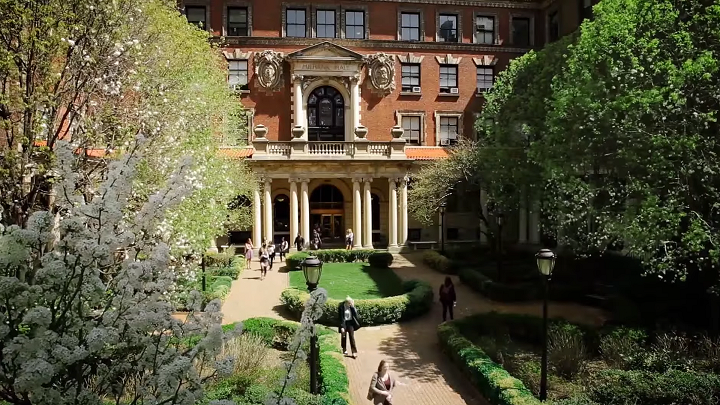
Photo: Barnard College. Retrieved from: www.barnard.edu

Barnard College is considered an elite college for women that allows only the brightest and most promising minds to enter the institution. Many ranking systems published in magazines rank this college as most selective. It is a member of the Seven Sisters group of colleges along with Barnard College, Bryn Mawr College, Mount Holyoke College, Radcliffe College, Smith College, Vassar College, and Wellesley College. Barnard has a total of 16 Division I Varsity Teams and nearly 400 faculty members, most of which are female.

A unique aspect of studying in Barnard is being affiliated with several elite colleges and universities, particularly Columbia. The University of Columbia and Barnard College have a partnership agreement that allows students to use the same residence halls, obtain access to all the library and facility resources that each school offers. Students from both schools compete in the Columbia-Barnard Athletic Consortium. Students of Barnard are given the diploma of the University, which has the signature of both Barnard’s president and that of the University president.

Barnard has its own finances, and has a separate endowment. It is independent in the important aspects, but students can share the facilities of a big university. Barnard specializes in programs related with architecture, dance, education, theater, and urban studies. Academic programs in statistics, engineering and computer science are taken at Columbia.

School History

Barnard was founded in 1889 as Barnard College of Columbia University, and the affiliation has stood strong until the present time. Barnard is located in an area adjacent to Columbia’s campus, with several other academic institutions nearby. Originally, Barnard College was created to become a women’s school during the time when Columbia and other Ivy League Schools were only accepting male students. By the turn of the century, women in Barnard were allowed to attend classes in the University of Columbia, including classes in political science, philosophy and science.

The namesake of the college was American educator and mathematician, Frederick Augustus Porter Barnard. During his term as the president of the University of Columbia from 1864 to 1889, he was an advocate of equal educational privileges and pushed for co-education in the university. His suggestion was not accepted, but the board relented in 7883 and agreed to produce a syllabus of courses for women. The first woman who graduated under the program, Annie Nathan Meyer, as well as other influential women in New York petitioned for the construction of a new women’s college with strong ties to Columbia University. The college continued to expand until the 1920s, and most of the Barnard buildings built during that time were considered historic places.

From 1955 onwards, Columbia and Barnard students could cross-register for courses offered by the other school. Permission to do this was required until 1973. In 1983, the original undergraduate school of the university, Columbia College, became co-educational after Barnard refused to merge with Columbia the way Radcliffe College did with Harvard University. Every fifteen years, the University of Columbia and Barnard college renegotiate their interoperate relationship.

Campus life

Being in New York City has its benefits and disadvantages. Unlike other liberal arts colleges where students have to commute a long distance before reaching the city, Barnard is inside the city itself. Finding entertainment is easy, but the difficult part is coping with the cost of living in a big metropolis. Freshmen students may or may not appreciate being on a mandatory food plan all year, because of the varied array of restaurants to eat in around the city.

The social life on campus is relatively strong, although the sense of community may not be the same as that in smaller colleges. There are always events to attend, and a student can make many friends in Barnard as well as in Columbia.

Financial Aid

All students are accepted based on merit, making the college’s admission policy need-blind. Admissions representatives are completely unaware of a student’s financial status while being evaluated. Accepted students that are permanent U.S. residents or U.S. citizens receive her acceptance letter with details on the financial aid award.

Rankings

2017 College Rankings
Best Colleges - Academic Challenge

  • Overview
  • Community & Safety
  • Academics
  • Social Life

Overview

Despite college rankings and countless beautiful college websites, most students and families know very little about the actual student experience at particular schools. College websites, campus tours and conversations with high school guidance counselors provide very limited information.

The Voice of the Student Survey compares the responses of over 7,500 liberal arts college undergraduates on more than 40 questions about college life. As a result, we learned what “real life” looks like at individual schools.

Some of the best (and worst) performers in our research are surprising. Some are among the U.S. News & World Report’s top ranked liberal arts colleges in the country, while others are ranked much lower but provide a successful student experience.

Our Liberal Arts Insider members know exactly how these colleges compare.

We surveyed thousands of liberal arts students to help you get the real scoop about the student experience… the good, the bad and the ugly.

Campus Community Coach & Safety Sherpa

How safe, accepted, and comfortable students feel on their college campus is one of the largest influencing factors as to how satisfied they feel with their college experience. Having a tight-knit college community is the cornerstone of a successful college experience, as proven by our Voice of the Students survey.

We can compare what the college brochures advertise to what students are actually experiencing; sometimes the admissions representatives have no idea how students on their campus really feel. This “Community” section is a way to find out exactly what students think about their campus, in their own words. Here, we have data about student satisfaction, housing, social cliques, and student’s sense of safety.

Get Our In Depth Analysis of Liberal Arts Colleges

The smartest way to cut through the college marketing hype and pick a college that is a perfect fit for your child is to become a Liberal Arts Insider member. Our research reveals inside information that colleges will never tell you.
Learn More

Academics Advisor

Without a doubt, academics are a major focus, if not the top priority, for many college students. Schools will often advertise their classrooms as collaborative, but we’ve found that students sometimes describe the academic environment as highly competitive. Are students helping each other with academic work or trying to get ahead? Do students spend every waking moment with their nose in a book?

We asked students both qualitative and quantitative questions to find out how the academics at this school challenge them, and contribute to their college experience. Find out directly from the students how they feel about academics, challenging or otherwise, at their school.

Get Our In Depth Analysis of Liberal Arts Colleges

The smartest way to cut through the college marketing hype and pick a college that is a perfect fit for your child is to become a Liberal Arts Insider member. Our research reveals inside information that colleges will never tell you.
Learn More

Social Life Navigator

In addition to academics, social life is integral to the campus experience, and it’s dictated by a few different elements. Do students feel discriminated against based on their identities? Where do students spend most of their time socializing? Do drugs and alcohol dominate the social scene? This is the kind of information that schools will NOT advertise.

So, to find truthful answers these to questions, we asked students for their perspectives. We looked into social aspects such as extracurricular involvement, opportunities in the local community, and alcohol/drug culture on this campus.

Get Our In Depth Analysis of Liberal Arts Colleges

The smartest way to cut through the college marketing hype and pick a college that is a perfect fit for your child is to become a Liberal Arts Insider member. Our research reveals inside information that colleges will never tell you.
Learn More

Fast Facts

Location:New York, NY
Year Founded:1889
Number of Students:2001 or more
Avg Net Price:$ 24,000
Retention Rate (%):95
Reported Test Type:SAT
Test Scores (75% percentile):1490
Test Scores (25% percentile):1320
Freshman in Top 10% of HS Class (%):81
Admit Rate (%):20
School Selectivity:Highly Selective
4 Year Graduation Rate (%):85

Note: Facts compiled from school website as well as other data sources including: US Department of Education, IPEDS, College Board and NCES.

About LiberalArtsColleges.com

We share the value of the liberal arts colleges with families and give liberal arts schools the opportunity to highlight their unique characteristics.

Learn About School Profile Upgrades

Click Here

Share the Love

  • Facebook
  • Twitter

Over $76,000 in Liberal Arts College Scholarships are Available

Want to see what
College Scholarships
are a Good Match for You?
Yes,
Show Me My
Scholarship Matches
No,
I'm all set right now.
Maybe later.

Copyright © 2026 LiberalArtsColleges.com | Disclosure | About | Resources | Contact Us

Terms & Conditions | Privacy & GDPR | Google+